
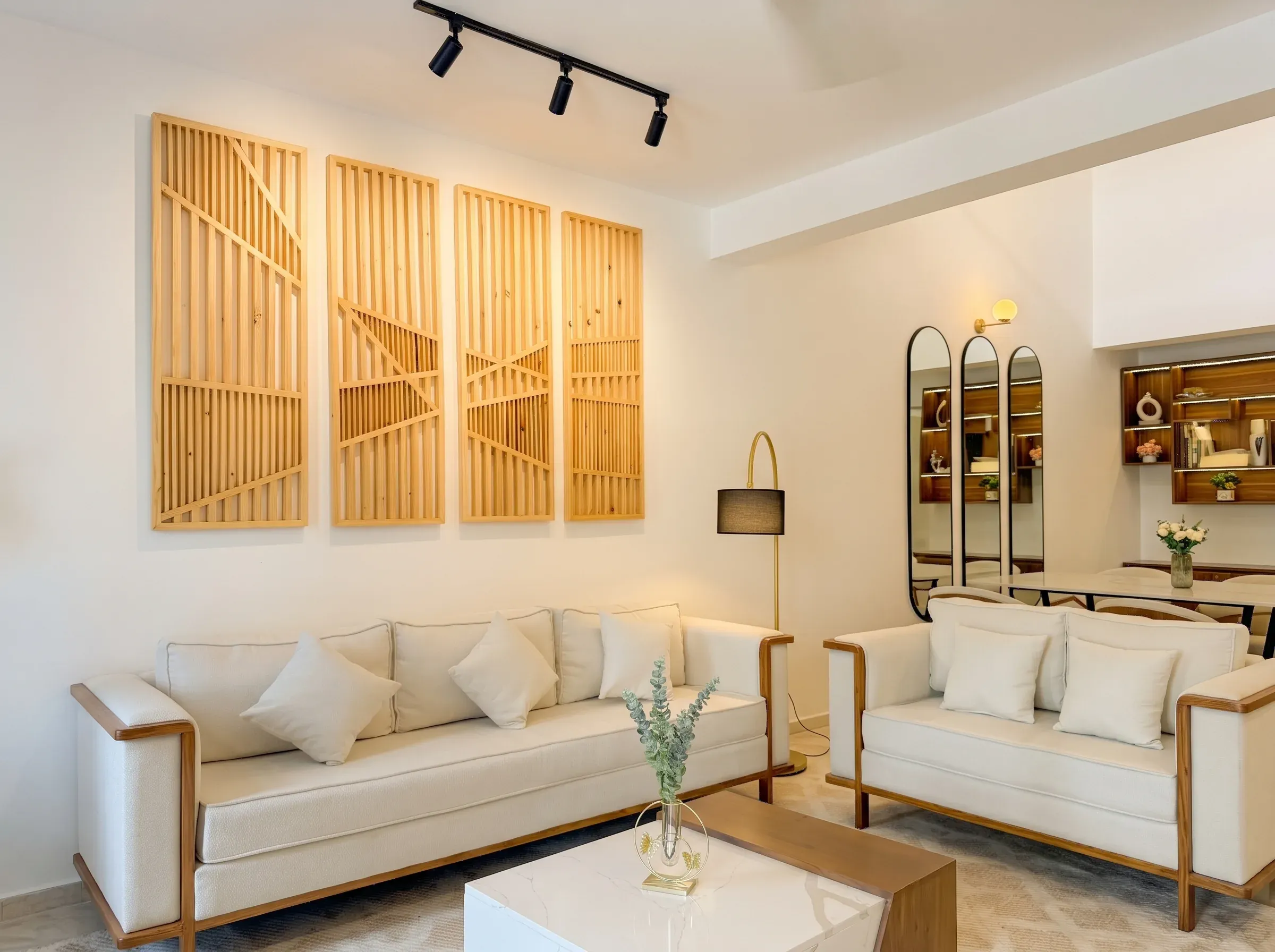
Short answer: choose an interior designer by looking at real finished projects (not renders), asking who actually builds the furniture, understanding how the designer charges and what the design includes, and checking what the warranty covers. Before anything is made, make sure you will see a 3D design, a clear itemised quote, and the payment stages and timeline in writing. In Sri Lanka, where much of the furniture in a home interior is made to measure, the link between design and fabrication matters as much as the designer’s taste.
An interior is a large spend, and you usually live with the result for ten years or more. Here is what to check, in the order it tends to matter.
1. Decide what kind of help you need
Interior companies in Sri Lanka work in three broad ways:
- Design only. You get drawings, a 3D view and a materials list, then hire your own carpenter, ceiling contractor and painter.
- Design and build. One company designs the interior and makes the furniture and joinery.
- Turnkey. One company handles everything: design, furniture, ceilings, flooring, painting, lighting, curtains and decor, and hands you a finished home.
None of these is right for everyone. If you enjoy managing tradespeople and have reliable ones, design-only can work. If you want one point of responsibility, design-and-build or turnkey is usually less stressful. Knowing which you want narrows your shortlist straight away.
2. Look at real, finished projects
Renders can show almost anything. Photos of completed homes show what the company actually delivers: how panels line up, how edges are finished, how doors sit when closed.
When you look at a portfolio, ask:
- Are these photographs of real homes, or 3D images?
- Which parts did the company design, and which did it build?
- Can they tell you the location and roughly when it was completed?
A company that has done the work can answer these easily.
3. Ask who builds the furniture
This is the question most people forget. Many designers hand their drawings to a separate carpenter or furniture maker. That can work, but it means:
- the person who drew the wardrobe is not the person who makes it,
- small changes on site get decided by whoever is there that day,
- if a door doesn’t close properly, each side can point at the other.
When design and fabrication sit with the same company, the drawings are prepared for real board sizes, hardware and joints, and one company is responsible for the result. The trade-off is that you have less room to compare build prices, because the same company prices the build. For the pros and cons of each route, see Interior designer, carpenter or design-and-build in Sri Lanka?
4. Check what the warranty actually covers
Ask for the warranty in writing and read the details. Useful questions:
- How long is it, and does it start at handover?
- Does it cover the structure: carcasses (the main box of each cupboard or wardrobe), joints and frames?
- Are hinges, drawer runners (the slides that drawers run on) and other hardware covered, and for how long?
- Are surface finishes covered, or excluded?
- What happens if something fails: who comes, and how quickly?
Sri Lanka’s humidity is hard on poorly made furniture, so a warranty on structure is a sign the company expects its work to last.
5. Make sure you’ll see the design before anything is made
Before fabrication starts, you should have:
- a measured layout of each room,
- 3D views you can comment on,
- the size of every item to be made,
- finishes, colours, fabric codes, board specifications and hardware agreed in writing,
- any changes to the electrical layout (switches, sockets and lighting points).
Changes on paper cost little or nothing (check how many revisions are included). Changes after boards are cut cost time and money.
6. Understand how they charge for design, and what you get
Designers usually charge for design in one of three ways:
- Per square foot of the area designed. This usually covers every space in the scope, so it is easier to compare.
- Per 3D rendered view. It can look cheaper, but check what comes with the images.
- Included with the build. Some companies include the design if you order the furniture from them. Its cost is then usually built into the build price.
Whichever way it is charged, check that the fee covers everything listed in step 5 for every space in the scope, not just one or two rooms. Ask how many revisions are included, and whether the fee is deducted if the same company builds.
For how fees work and what affects them, see How much does interior design cost in Sri Lanka?
7. Get an itemised quote, and the terms in writing
A good quote lists what is included (furniture, ceilings, electrical points, lighting, painting, curtains) and what is not. Be careful with a single lump-sum figure. The design fee and the build quote are usually separate.
By the time fabrication starts, make sure these are clear in the quote or in a simple written agreement:
- Scope: the approved drawings, and what is included and excluded.
- Timeline: agreed once the design is approved.
- Payments: linked to clear stages (for example before design, at the start of fabrication, during the work and at handover), with what each payment covers. Get a receipt in the company’s name for each one.
- Changes: how changes during the project are priced and agreed.
8. Read reviews and talk to past clients
Google reviews are a quick way to see how a company handles real clients, especially comments about timelines, communication and after-sales service. If you can, speak to someone who completed a project with them a year or two ago; that is when weak joinery shows.
9. Notice how they treat your first meeting
The first site visit says a lot. A good designer measures carefully, asks how you live (who uses each room, what you need to store, what you dislike about your current space) and explains the next steps clearly. If you are rushed into a decision, take that as a signal.
How we work at SM Interiors
SM Interiors is an interior design and furniture fabrication studio on Waragoda Road, Kelaniya, serving Colombo and suburbs, with around 90 residential and commercial projects completed since 2023. As one example of a design-and-build approach, this is how we handle the points above:
- Measuring and design: we measure on site and show you 3D views before anything is made.
- Building: we make the furniture and joinery in-house, to the approved drawings.
- Finishes: we handle false ceilings, flooring, painting, lighting, drapes and decor, so you have one point of contact.
- Size of job: single custom pieces are welcome, as well as single rooms, apartments, full homes and offices.
- Design fee: priced per square foot for the area ranges in our cost guide, which lists guide prices; other sizes are quoted after a site visit or a discussion. Three revisions are free, and the fee is deducted if you do the full job with us (design, fabrication and finishes).
- Design only: welcome. The design includes all the details a builder needs, so you can take it to any builder and compare prices.
- Timeline: we agree a clear timeline with you after the design stage, before fabrication begins.
- Payments: the design fee is paid upfront. For fabrication, we take a 60% advance when fabrication starts, a 25% interim payment, a further 10% in stage payments as the work progresses, and the final 5% at handover. We provide a signed quotation.
- Warranty: our furniture carries a 5-year warranty on its structure against manufacturing defects (surface finishes and hardware, such as hinges and drawer runners, are not covered).
- Site visits: free across Colombo and suburbs. Elsewhere there is a visit charge, paid in advance and credited to the fabrication cost (not to design fees) if you go ahead with us building your furniture.
The trade-off is the one described in step 3: with design and build from one company, you have fewer build quotes to compare. If comparing matters more to you, choose design only (see above).
To see the results, look at Canterbury Villa in Kahathuduwa (the living room at the top of this page), The Heights, an apartment in Narahenpita, and Piliyandala Residence. For commercial work, our portfolio has films of two full interiors: Venus Clinic in Dalugama, Kelaniya, and Aura Wellness in Malabe. Our interior design and turnkey interiors pages explain each service.
Whoever you choose, use the checklist above. A designer who is happy to answer every one of these questions is usually one you can trust with your home.
Related: How much does interior design cost in Sri Lanka? · 15 questions to ask before hiring an interior designer in Sri Lanka · Interior designer, carpenter or design-and-build? · Melamine, MDF, HDHMR, plywood or solid wood
Common questions
What should I look for first when choosing an interior designer?
Look at photos of finished, lived-in projects rather than 3D renders, and ask who will build the furniture. The gap between a good render and a well-made room is where most interior projects go wrong.
Is it better to hire a designer who also builds the furniture?
It often is. When the same company designs and fabricates, the drawings are made for real materials and joints, and there is one party responsible if something doesn't fit or fail. The trade-off is less room to compare build prices, because the same company prices the build. If the designer and the carpenter are separate, you have to coordinate them yourself.
What should I get for an interior design fee?
A complete design should give you 3D views of every space in the scope, the size of every item to be made, colours and materials (including board specifications and fabric codes), any changes to the electrical layout, and an agreed number of revisions. Check whether the fee is charged per square foot or per 3D view, and whether it is deducted if the same company builds.
What should a furniture warranty cover?
Ideally, the structure of the furniture (carcasses, joints and frames) against manufacturing defects for several years. Ask separately whether hinges, drawer runners and other hardware are covered, and whether surface finishes are covered, because many warranties exclude them.
What should be in writing before fabrication starts?
The scope, including what is excluded; the approved drawings; a timeline agreed after the design is approved; the payment stages and what each payment covers; and how changes are priced. This can be in the quote or in a simple written agreement.
Do interior designers in Colombo charge for site visits?
Practices vary. Some offer a free first visit within their main area and charge for visits further away, and some credit that charge against the work if you go ahead. Ask before booking so there are no surprises.